As a licensed Amana AC specialist Dallas homeowners can call 7 days a week, we install Amana on most jobs. Lennox on the rest. Daikin if you specifically ask. Here’s the honest reasoning — including the three specific scenarios where Lennox is the better pick. No brand boosterism.
Amana AC equipment is built in Waller, Texas by Daikin, one of the world’s largest HVAC manufacturers. Its premium lines carry strong manufacturer warranty coverage (terms vary by model). For Texas-summer parts supply, the math is genuinely better. It’s not the quietest brand. It’s not the flashiest app. It’s not the highest peak SEER2. We’ll tell you exactly where it wins, exactly where it doesn’t, and which one of those matters for your house.
Call (972) 673-0408 — free no-pressure brand consult, 7 days a week.
Serving DFW since 2004 · Highly rated on Google · TDLR Lic. TACLB00018282E · Licensed Amana specialist · Certified Lennox specialist · Available 7 days a week
Why we wrote this (and the 3 scenarios where we’d recommend Lennox over Amana)
We’re Randy and Teresa Lazenby’s HVAC company. We’re a licensed Amana specialist — that’s the manufacturer’s top dealer tier — and we’re a certified Lennox specialist. We service every other major residential brand sold in DFW (Carrier, Trane, Rheem, Goodman, Daikin, York, American Standard). After 22 summers and many thousands of service calls, we’ve seen enough to have a defensible favorite — but not enough to claim “Amana is the best brand” without qualification. That’s the kind of claim that loses Brand Shopper readers in one paragraph.
What’s NOT in this article: no Lennox-bashing, no Carrier-bashing, no “the other brands are junk” pitch. We carry the Lennox credential and install plenty of Lennox systems every year. If a Brand Shopper reads this and concludes “actually, Lennox sounds right for my house” — we’ll write an Amana vs Lennox quote side by side for exactly that reader, because we’d rather quote you the right system than push the wrong one.
This is “here’s why we picked Amana AC for DFW homes specifically — and here are the three scenarios in the honest cons section where we’d recommend Lennox instead.”
Reason 1 — Amana is built in Texas (and that matters more than it sounds)
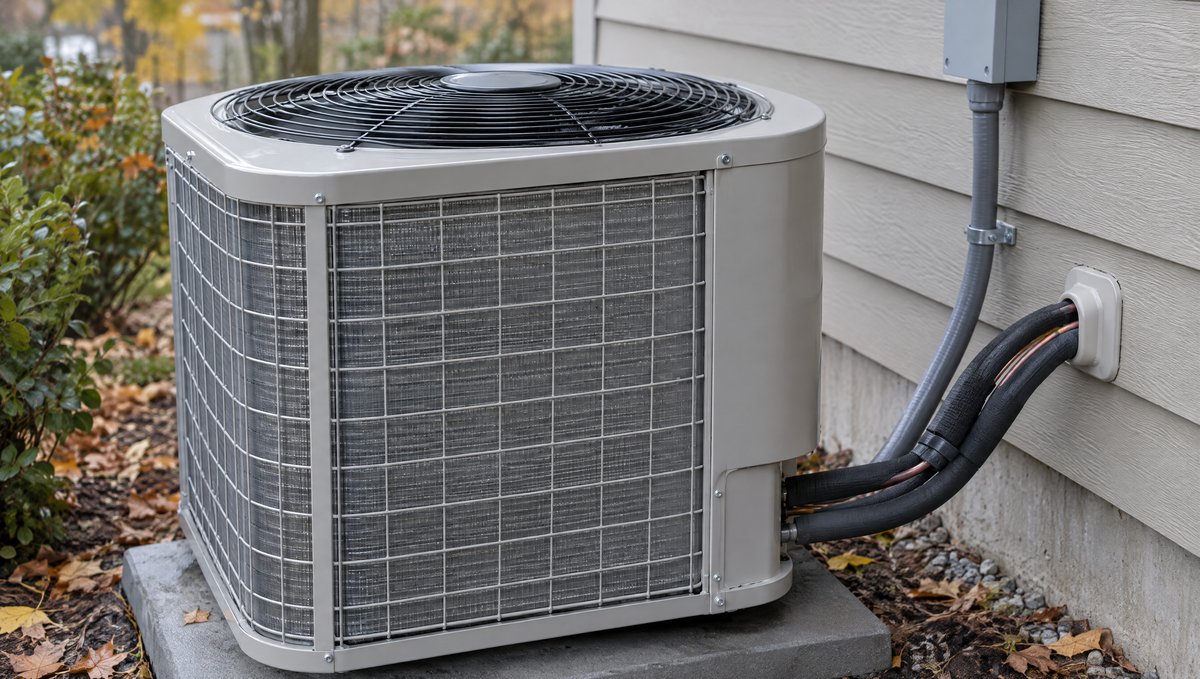
Amana has been part of the Daikin family — one of the largest HVAC manufacturers in the world — since 2012. Daikin builds Amana residential systems at the Daikin Texas Technology Park in Waller, Texas, northwest of Houston.
For a homeowner in DFW, that’s not flag-waving — it’s supply chain.
When a control board, a TXV valve, or a specific compressor model is on backorder somewhere in the country in mid-July, “built in Texas” usually means parts are a few hours’ drive away, not weeks out on an overseas container. We’ve felt that difference: in our experience, Amana AC parts tend to show up faster during peak-season backorders.
Other major brands, including Lennox and Trane, also build residential equipment in the U.S. and have domestic supply chains, and we don’t pretend otherwise. The Amana AC edge for DFW is proximity: it’s built in Texas, at scale.
Reason 2 — The Amana warranty position is genuinely strong
Amana’s premium residential lines carry a lifetime unit-replacement limited warranty on the compressor on select models, when the system is registered within the manufacturer’s registration window and maintained per the OEM schedule. The rest of the system is covered by a manufacturer parts warranty; terms vary by model. You can read the current terms on Amana’s official warranty page.
Other major brands publish their own warranty terms, which also vary by product line and tier. Compare those published terms with the Amana warranty for the specific model you’re quoted — we’ll walk through them with you at the estimate.
The lifetime piece isn’t a gimmick. The conditions are real (registered + maintained), and that’s a separate conversation about why a maintenance plan matters. But the policy is honored when the conditions are met.
One caveat we tell every customer. The Amana warranty’s lifetime compressor coverage is typically non-transferable. If you sell the house, the next owner generally inherits standard coverage, not the lifetime piece. That matters for some buyers; it doesn’t for others.
Reason 3 — Variable-speed technology at a lower price point
Variable-speed flagship Amana AC equipment (each certified model is verifiable in the AHRI directory) modulates compressor capacity — meaning the system runs longer at lower output instead of cycling hard on/off. For Texas humidity control specifically, that’s the single biggest comfort upgrade available in residential equipment.
Lennox’s comparable variable-capacity tier does the same thing — arguably with more refined acoustics. The difference for a DFW homeowner is usually $1,500–$3,000 at the point of sale, with the Amana AC coming in lower for similar SEER2 rating. That gap pays for either (a) better ductwork repairs we’d otherwise have to skip, or (b) a year of utility savings to bank.
Reason 4 — Being a licensed Amana AC specialist Dallas homeowners can verify isn’t pay-to-play
This is the piece most homeowners don’t know to ask about. Amana’s dealer program has tiers, and the licensed specialist tier requires:
- NATE certification on installing technicians (Industry-standard HVAC tech credential)
- Annual installer training audits from the manufacturer
- Parts-stocking requirements (we have to carry common Amana parts on the truck, not order them after diagnosis)
- A documented continuing-education program for the install crew
A contractor can sell you an Amana off the shelf without any of that. They’re “an Amana dealer.” As a licensed Amana AC specialist Dallas homeowners can verify, we go a step further: when you call us, we have the parts, the training, and the manufacturer relationship to honor the warranty paperwork correctly. That’s the credential. Ask for it; if a contractor can’t produce it, that’s information.
Halfway check — let’s just talk it through. If you’ve read this far, you’re not casual-browsing. You’re inside the decision. Here’s the risk/reward math on calling us: a brand consult is free (no service-call fee on replacement quotes). Worst case, you spend 45 minutes letting us measure your home and walk your ductwork, and you walk away with a written Amana vs Lennox quote you can compare against any other contractor’s. Most likely you save $1,500–$3,000 vs. the contractor who only sells one brand. Call (972) 673-0408 — real people, 7 days a week.
Amana vs Lennox: the 3 scenarios where we’d recommend Lennox instead
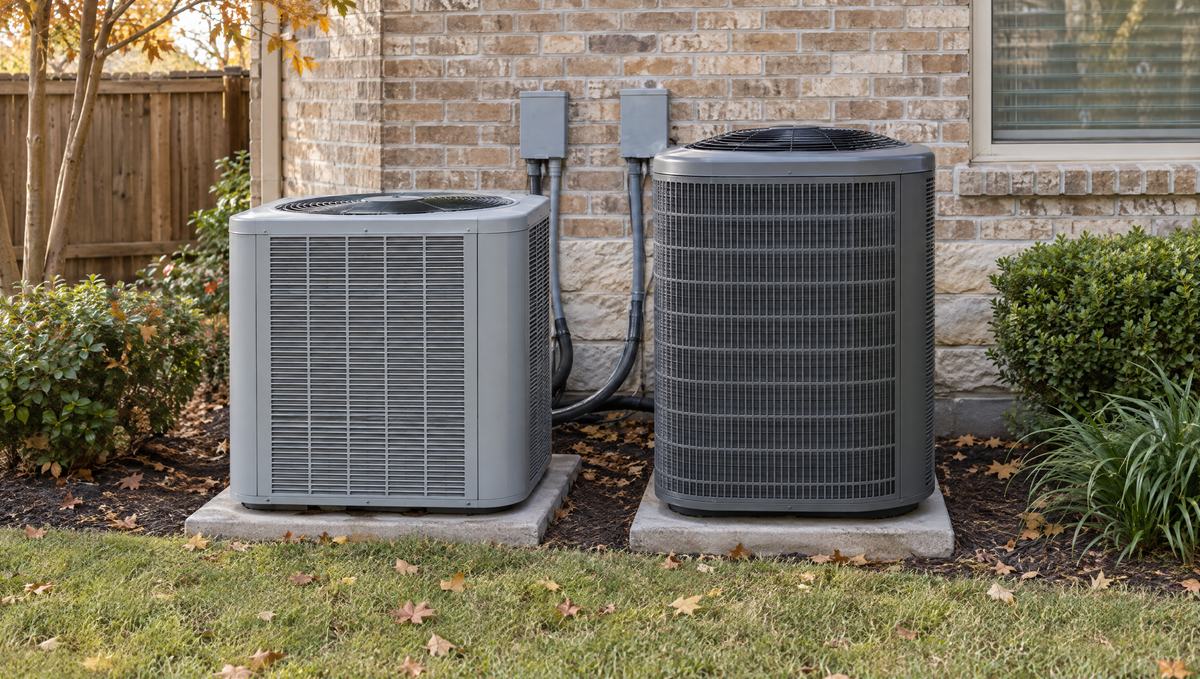
This Amana vs Lennox section is the load-bearing part of the post. If you only read one part, read this.
Scenario 1 — Condenser sits near a bedroom, patio, or pool deck (noise wins). Lennox’s flagship variable-capacity units are among the quietest residential outdoor equipment available, and in our experience they run noticeably quieter than Amana’s at full load. Compare the published sound ratings for the specific models you’re quoted — a 10 dB difference is perceived as roughly half as loud. If your outdoor pad is 8–15 feet from a master-bedroom window or a patio you actually use, pick Lennox. We’ve sized both for the same Plano street for exactly this reason.
Scenario 2 — Heavy smart-home household with HomeKit/Alexa/SmartThings integration (app wins). Amana’s Comfort Bridge platform works fine for thermostat-and-schedule needs. Lennox’s iComfort S30 has a longer track record, more third-party integrations, and a more polished UX. If your house is already wired into Apple Home or you want one ecosystem managing climate alongside lights, locks, and shades, pick Lennox. We won’t pretend Amana matches that maturity.
Scenario 3 — Buyer specifically wants the highest published SEER2 (top-end efficiency wins). Lennox’s top-tier units publish some of the highest SEER2 ratings in residential equipment, generally above Amana’s flagship. For most DFW homes the real-world utility difference at the very top of the efficiency range is small. But if specs matter to you on principle, or if you’ve already decided you want the leader on the nameplate number, pick Lennox. It’s the right answer for that priority.
One more honest note that isn’t a Lennox-wins-scenario but matters for trust:
- Builder-grade Amana exists, and it isn’t the product we install. Amana sells lower-tier builder-grade models that spec into production new construction. Those are not the same product as a homeowner-replacement variable-speed. If you’re being quoted an “Amana” that’s a basic single-stage unit with shorter warranty coverage, that’s a different conversation. We don’t install those for replacement work — and we’ll tell you that on the quote.
If any of the three scenarios above matter more for your home than warranty length and Texas-built parts supply, you’re a Lennox customer, not an Amana customer. That’s fine. We’re certified Lennox installers too. Call (972) 673-0408 and we’ll quote both brands side-by-side — same load calc, same paper — so you can compare honestly.
How Amana AC holds up in DFW heat specifically
A few field-level observations from 22 years of DFW service work, the kind of pattern you only see as an Amana AC specialist Dallas homeowners call back year after year:
- Compressor longevity. A maintained Amana compressor in DFW commonly runs 15–20 years. The unmaintained ones fail at 8–12, which is the same range every brand fails at without maintenance. The brand doesn’t override the maintenance reality.
- Coil corrosion. Amana’s outdoor coils use a coated-fin construction that holds up well against the mineral-heavy water profile common in DFW sprinkler systems hitting the unit. Lennox and Trane use similar coatings now; older units from any brand can corrode within 6–8 years if hit nightly by hard water.
- Capacitor / contactor failures. Universal across brands. Anything sitting in a 105°F Texas afternoon will eventually have an electrical part give up. Amana parts are stocked locally; some other brands’ specific OEM parts can take longer during peak season.
- Refrigerant transition. Under the EPA’s HFC phase-down, new residential systems use lower-GWP refrigerants instead of R-410A — such as R-32 or R-454B, depending on the manufacturer. The current Amana systems we quote use a lower-GWP refrigerant, as do the current lines from Lennox, Trane, and Carrier.
This is roughly equal performance across the maintained-system, properly-sized population. The differentiation is in warranty + parts supply + price, not in the physics of the cooling cycle.
What actually happens after you call our Amana AC specialist Dallas team
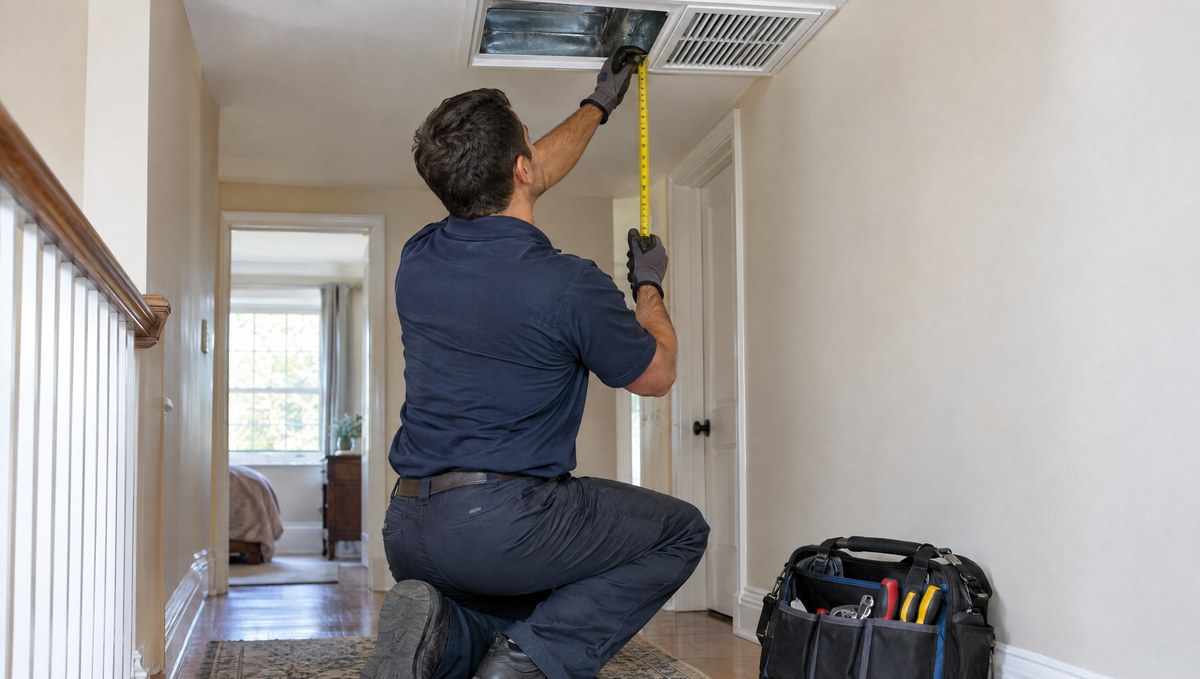
Family business. Randy and Teresa run it. We’ve installed Amana AC systems in DFW homes since the brand was Goodman-owned, and Lennox alongside it for nearly as long. Here’s exactly what happens after you dial:
- A real person picks up. No phone tree, no “press 1 for sales.” Usually Teresa, often the first ring.
- We walk your home, measure for Manual J load, and ask about your priorities — noise, budget, aesthetics, longevity, warranty, smart-home integration. That conversation usually shapes the brand recommendation before we look at a single SEER2 number.
- We recommend the brand that fits your priorities — sometimes Amana, sometimes Lennox, sometimes neither. If your existing system has 6 more good years and a simple repair like a capacitor swap is the real answer, we’ll tell you that for free and not sell you anything.
- Written quote with the specific model number and SEER2 rating — no “premium system” code language. You see the exact model number. You see the AHRI-certified match number you can verify yourself in the AHRI directory before signing.
- No bait-and-switch on tier. If we quote you a variable-speed Amana AC system, that’s what gets installed — not a builder-grade swap on the day-of.
- Warranty paperwork registered for you. Amana’s lifetime compressor coverage requires registration within the manufacturer’s window; Lennox has a registration requirement too. We file it, you get the confirmation, the warranty starts the day of install.
That last one is worth saying twice. Many of the systems we work on were installed by other contractors — we still service them, still tell the homeowner the honest condition, still recommend the repair over the replacement when the repair is the right call. Our Google reviews reflect that after 22 years — not because we never say “you need a new system,” but because when we do say it, it’s true. And not because we always say “Amana” — because when we say “Lennox is the right pick for your house,” we mean it.
About the Comfort Club
Comfort Club ($29.95/month, cancel anytime, 3-month minimum if you took a promo discount) gets you two scheduled tune-ups per year, emergency-rate drop from $189 to $99, and priority service. For Amana installs specifically, and this is something any Amana AC specialist Dallas homeowners hire should tell you up front, the annual maintenance is what keeps the lifetime compressor warranty active. Skipped maintenance is one of the few legitimate reasons a manufacturer warranty claim gets denied. Comfort Club is the easiest way to keep that paperwork clean.
Read about +19726730408 about the Comfort Club →
Amana AC specialist Dallas FAQ
Q: Is Amana made in the USA — and does Texas-built actually matter for a DFW homeowner?
A: Yes, and yes — and the “actually matters” piece is the part most contractors don’t explain. Residential Amana systems are built at the Daikin Texas Technology Park in Waller, Texas, northwest of Houston — a few hours’ drive from Plano. Daikin acquired the Goodman/Amana family in 2012.
The concrete homeowner benefit: when a control board, TXV valve, or specific blower motor is on national backorder in mid-July, “built in Texas” usually means faster parts availability. In our experience, Amana parts tend to arrive faster than many competing brands’ during peak season.
Lennox and Trane have domestic supply chains too, and we don’t pretend otherwise — but at peak DFW summer demand, the Texas proximity tends to win on average. Call (972) 673-0408 for a free brand consult with an Amana AC specialist Dallas homeowners can reach 7 days a week — we’ll walk the parts-supply piece for both brands honestly.
Q: How is Amana different from Goodman? Aren’t they the same company?
A: Same parent (Daikin), different product tiers. Goodman is positioned as the value brand — shorter warranties, more single-stage equipment, builder-grade common. Amana AC equipment is positioned as the premium tier within the Daikin-owned family — longer warranties (including the lifetime compressor warranty on flagship lines), more variable-speed equipment, and the licensed-specialist dealer program. The shared manufacturing means parts are interchangeable on some components, which is part of why both brands have strong DFW parts availability.
Q: What’s the typical Amana warranty in 2026?
A: For Amana’s premium residential lines, the warranty on select models is lifetime unit-replacement on the compressor plus manufacturer parts warranty coverage (terms vary by model), contingent on two conditions: (1) the system is registered within the manufacturer’s registration window after install (we file this for you on every install — once the window closes, it generally can’t be reopened), and (2) the system is maintained per Amana’s published schedule, typically annual professional service with documented records.
Builder-grade and lower-tier Amana models (lower-SEER2 single-stage units commonly spec’d into production new construction) carry shorter coverage, with no lifetime piece. The lifetime piece is typically non-transferable; the next owner generally inherits standard coverage at resale. Want exact warranty terms on the specific model that fits your home? Call (972) 673-0408 for a free brand consult — we’ll walk the paperwork before you sign anything.
Q: Is the Amana lifetime compressor warranty actually honored?
A: Yes, when the conditions are met — meaning the system was registered within the manufacturer’s registration window and maintained per the OEM schedule (typically annual). The two failure points we see are (a) skipped registration (once the window closes, it generally can’t be reopened) and (b) skipped maintenance documentation, which is one of the warranty conditions. Both are avoidable with a maintenance plan, which keeps every Amana warranty claim clean.
Q: Does Amana AC hold up in DFW heat specifically?
A: Yes — and that’s the supply-chain piece. The compressor and coil technology in current Amana flagship systems is similar across all major brands; physics is physics. Where Amana wins for DFW specifically is (a) parts availability during peak summer (Texas-built, parts on local trucks), (b) coated-fin construction that handles the mineral-heavy water common in DFW sprinkler runoff, and (c) the lifetime compressor warranty, which is most valuable in a climate that runs the compressor 6 months a year. Maintained Amana AC systems in DFW commonly run 15–20 years.
Q: Can you install an Amana AC on top of existing non-Amana ductwork?
A: Yes, in most cases. The ductwork is independent of the equipment brand. What matters is whether the existing ducts are correctly sized for the new system’s airflow (CFM) requirements, are sealed (leaky ducts waste 20–30% of cooling per ENERGY STAR), and are insulated. We measure static pressure and inspect the duct system as part of every install quote. If the ducts need work, you’ll see it in writing before the equipment ships. We never install a high-efficiency system onto failing ductwork without disclosing the airflow tradeoff.
Q: Does Comfort Club membership affect the Amana warranty?
A: It supports it. Amana’s parts and lifetime compressor warranties require documented annual maintenance to remain valid. Comfort Club includes two tune-ups per year (spring AC, fall heating), which satisfies the OEM maintenance condition and gives you written service records — which is what a manufacturer asks for if a warranty claim is filed. Membership is $29.95/month, includes both tune-ups, and drops the emergency rate from $189 to $99. For an Amana install specifically, it’s the simplest way to keep the warranty paperwork clean.
What to do next
You’ve got the honest version now. Texas-built. Lifetime compressor coverage on select models when registered and maintained. Better-than-average parts supply during peak summer. Not the quietest. Not the most polished app. Not the highest peak SEER2. And in the Amana vs Lennox section we’ve told you the three specific scenarios where we’d recommend Lennox instead.
If you’re weighing a replacement, fall is a good time to do it. The off-season usually means easier scheduling and no pressure from a system that quit in a heat wave, and your new system is ready before next summer.
The next step is the simplest one:
Free brand consult from a licensed Amana AC specialist Dallas families have trusted since 2004. We walk your home, ask about your priorities, recommend the right brand — even if it’s not Amana. We measure load, walk the ductwork, and put a written quote in your hands with the specific model number and AHRI certificate before you sign anything. Compare that to the contractor who only sells one brand and tells you it’s always the right answer.
If you’re still weighing Amana vs Lennox, ask us to quote both side by side. We install both, honestly.
No “Act now!” theater. No brand pitches. Just what we’ve done since 2004: measure honestly, recommend the brand that fits, install it right, and stand behind the work.
— Randy & Teresa, and the team at 1st Class Heat & Air, Inc.
Call (972) 673-0408 · Schedule a free brand consult →
Licensed in Texas: TDLR TACLB00018282E. Regulated by The Texas Department of Licensing and Regulation, P.O. Box 12157, Austin, Texas 78711, 1-800-803-9202.