Repair or Replace?
Repair or Replace? The $5,000 Rule for DFW Homeowners (2026 Guide)
You’ve got a repair quote in hand — maybe $1,200 on a 12-year-old system, maybe $2,800 on a 15-year-old one — and you’re deciding whether to spend it or put that money toward a new install.
Here’s the rule HVAC techs actually use: multiply the repair cost by the system’s age. If that number tops $5,000, lean replace. Below it, lean repair. Everything else is detail — and below, we walk the detail with the math.
Call (972) 673-0408 for a free written second-opinion read on your repair quote. No pressure, no obligation.
Key Takeaways
- The $5,000 rule: repair cost × system age. Over $5,000–$6,000, lean replace.
- Age tiers: under 8 yrs repair; 8–12 depends; 12–15 lean replace; 15+ replace.
- The R-22 trap: any pre-2010 system with a refrigerant leak is effectively a replace decision in 2026.
- Efficiency: a new 16 SEER2 runs ~37% more efficient than an old 10 SEER.
- Free second-opinion read on your repair quote — no pressure, no obligation.
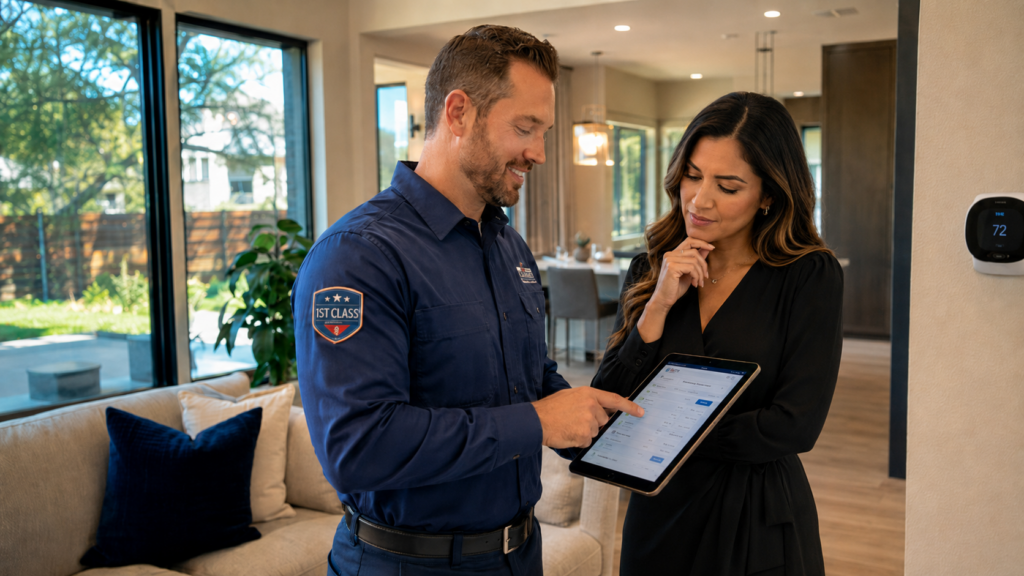
The $5,000 Rule (and Why It Works in DFW)
The industry rule of thumb: multiply the repair cost by the system’s age in years. If the result tops $5,000–$6,000, replace. We use the higher figure because DFW runtime is brutal — 5–6 months of cooling, often 8–12 hours a day at peak. Real quotes we’ve seen this season:
For context, a full HVAC system replacement in Allen, TX typically runs between $7,500 and $16,000, depending on tonnage, efficiency tier, and ductwork — which is exactly why timing the repair-vs-replace decision well matters.
- Compressor swap, 8-yr mid-grade — $2,400 × 8 = $19,200 → Replace
- Capacitor + contactor, 6-yr premium — $380 × 6 = $2,280 → Repair
- R-410A leak repair, 12-yr — $1,200 × 12 = $14,400 → Replace
- Blower motor + control board, 9-yr — $950 × 9 = $8,550 → Lean replace
- Evaporator coil, 10-yr premium — $1,800 × 10 = $18,000 → Replace
- Capacitor only, 14-yr premium — $250 × 14 = $3,500 → Repair (but plan ahead)
The $5,000 Rule Calculator
Drag the sliders — repair cost × system age tells you which way the math leans.
Age Tiers: Where Your System Actually Sits
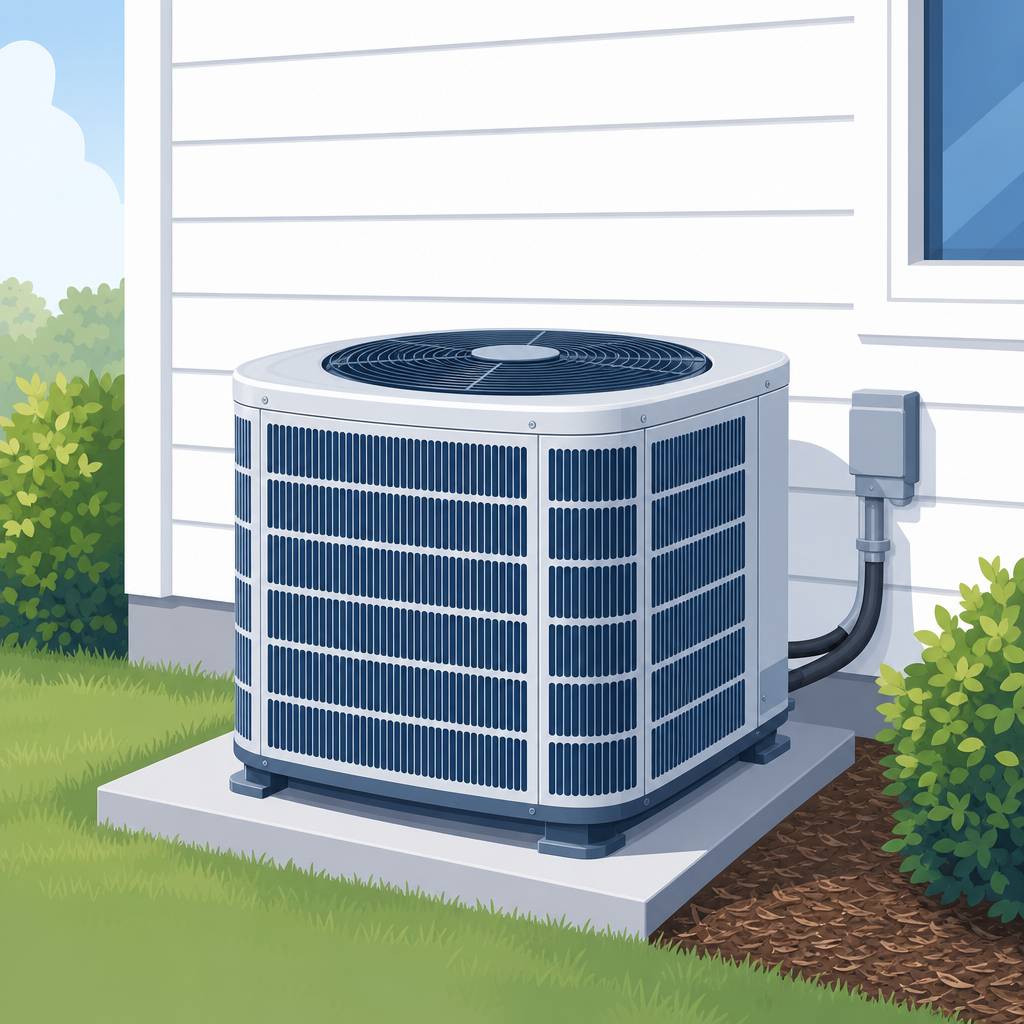
Almost always repair
Most useful life is ahead, and parts are often still under manufacturer warranty.
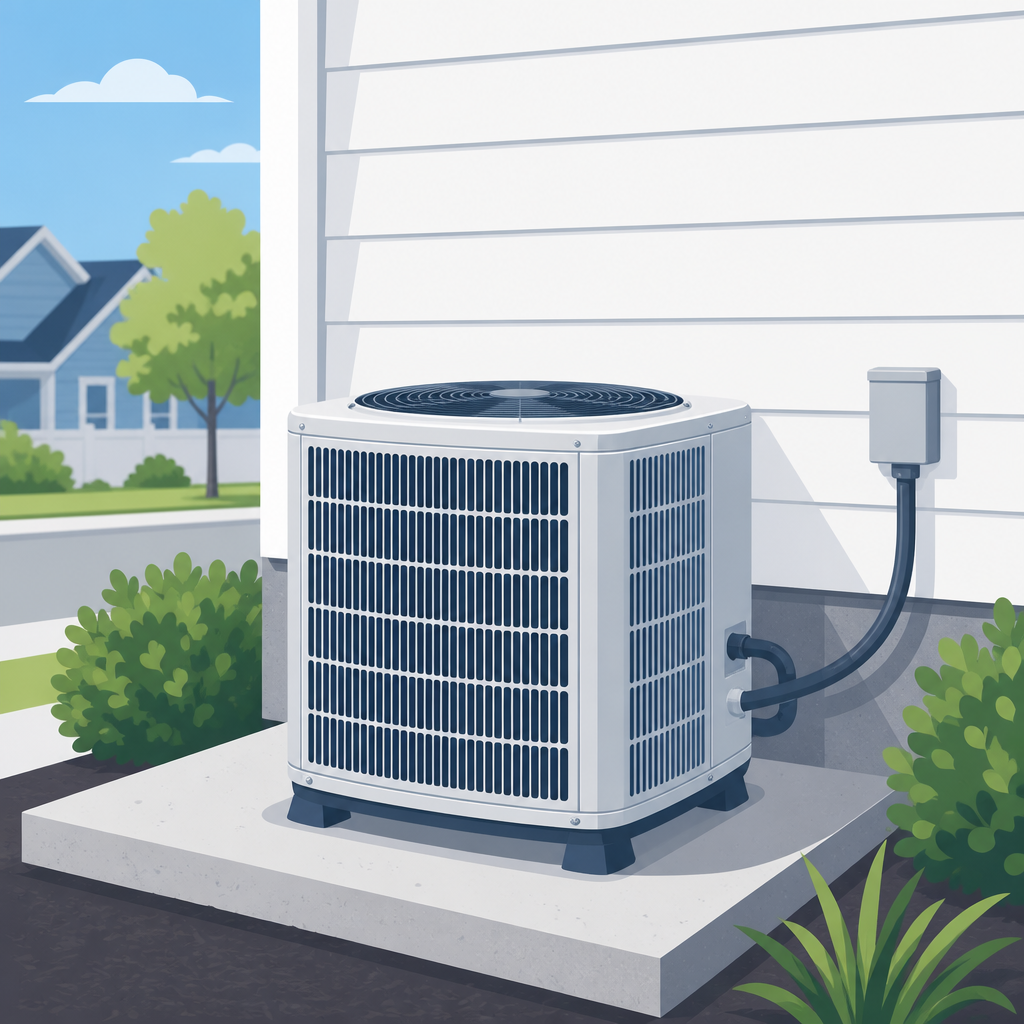
It depends
Run the $5,000 rule, then check the refrigerant type before you decide.
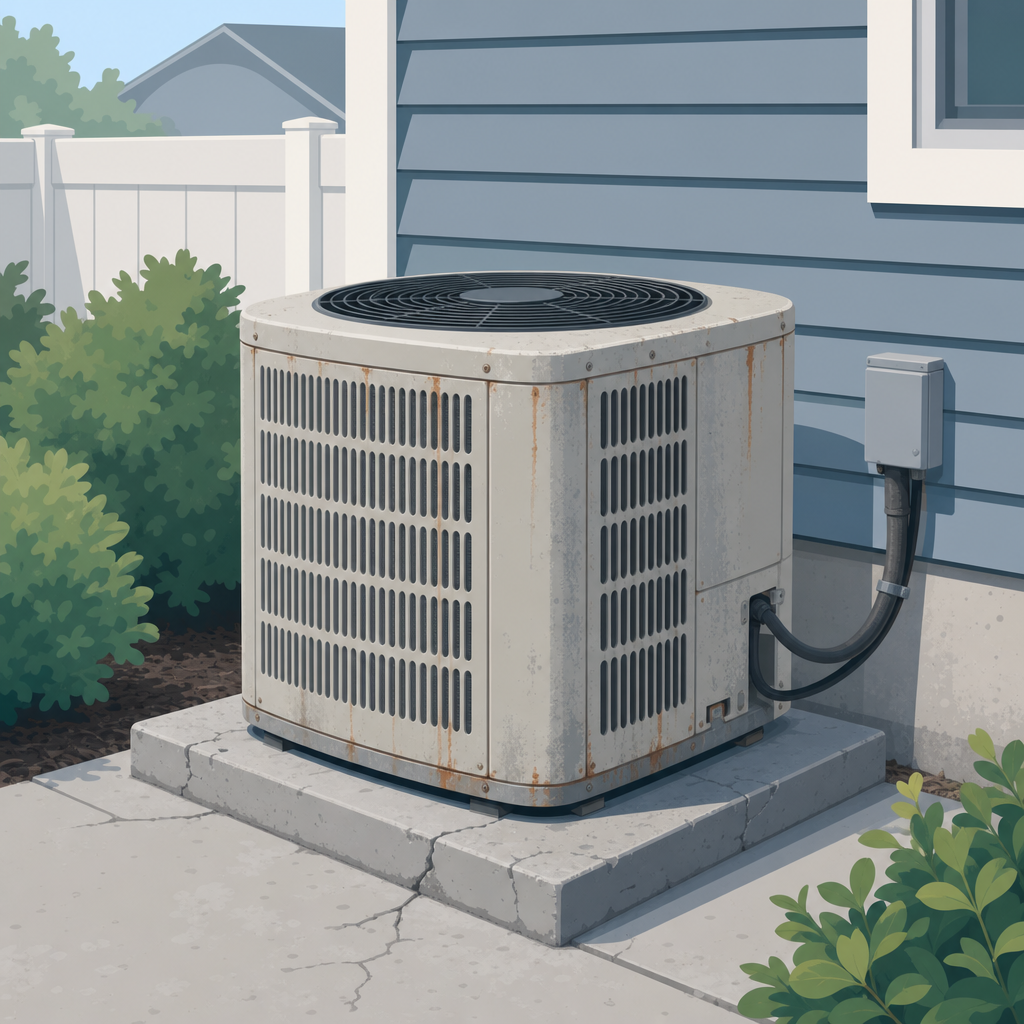
Lean replace
Any repair quote over $800–$1,000 should trigger the replace conversation.
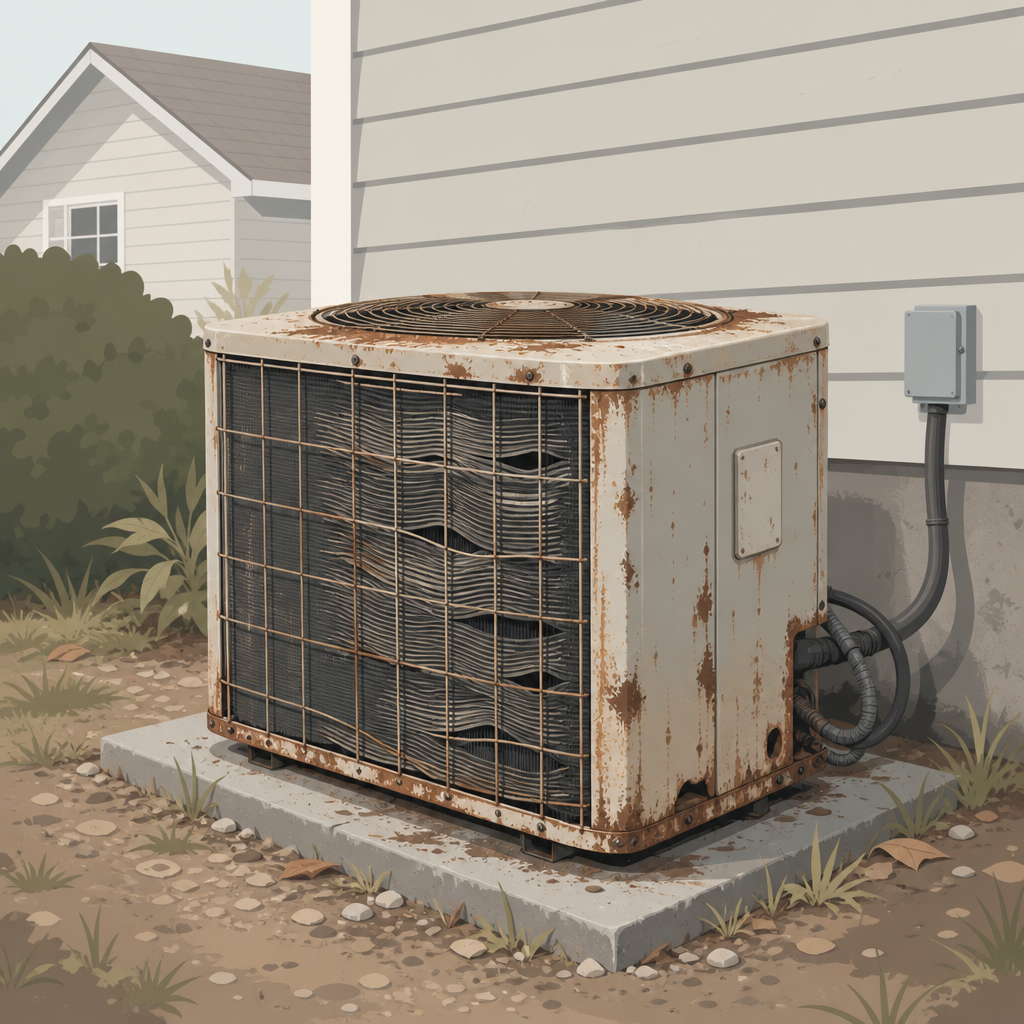
Replace
The next failure is statistically close and the efficiency gap is wide.
DFW real-world lifespan runs about 12–15 years for a well-maintained system (vs 15–20 nationally per ENERGY STAR/ACCA) — our long, hot cooling season accelerates wear.
The R-22 Trap & the Efficiency Math
- R-22 production has been banned since 2020 (EPA Clean Air Act) — only stockpiles remain.
- R-22 runs roughly $80–$200/lb vs ~$40–$60 for R-410A.
- A 3-ton recharge can be $600–$2,000 in refrigerant alone, before labor.
- Any pre-2010 system with a leak is effectively a replace decision in 2026.
Will a new system actually lower your bill? Yes — meaningfully — if you’re replacing something genuinely old:
- 10 SEER (2008) → 16 SEER2 is roughly 37% more efficient.
- ≈ $110/month saved on a $300 summer bill ≈ $440 per cooling season.
- ≈ $2,200 over 5 years — before the federal 25C credit + Oncor rebate.
- Replacing a 14 SEER → 15.2 SEER2 is only ~8% — payback leans on comfort & warranty.
One honest caveat: per ENERGY STAR, leaky or undersized ducts can waste 20–30% of cooling output — so a high-SEER2 system on bad ducts will underperform its rating. We test static pressure before quoting.
Signs That Lean Towards Replacement
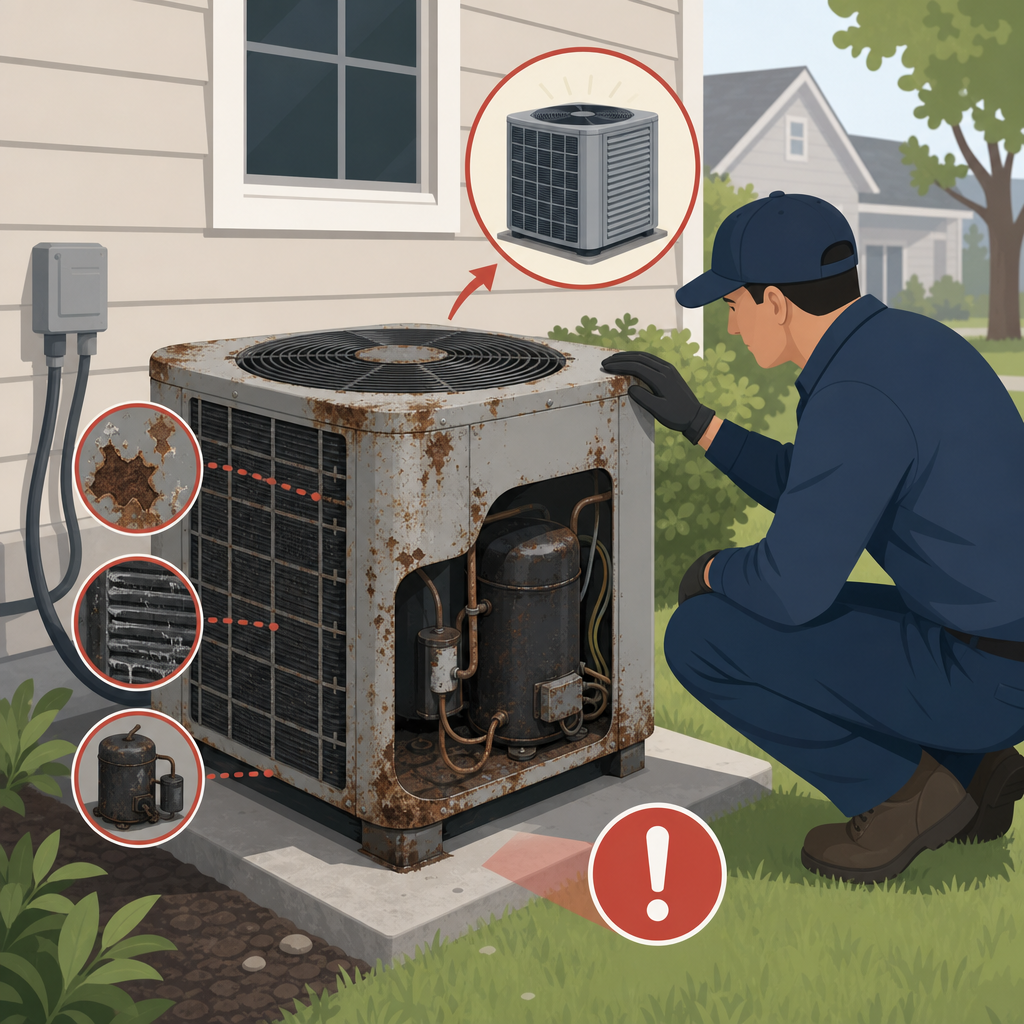
- Uneven cooling room-to-room that wasn't there originally.
- Runs continuously without holding setpoint, even after a fresh filter and coil clean.
- Condenser corroded or hail-damaged on top of the current failure.
- This is the second or third major repair in 24 months.
- Refrigerant has been added more than once (that's a leak, not "low from the factory").
- Energy bills creeping up year over year with the same usage.
Signs That Lean Towards Repair
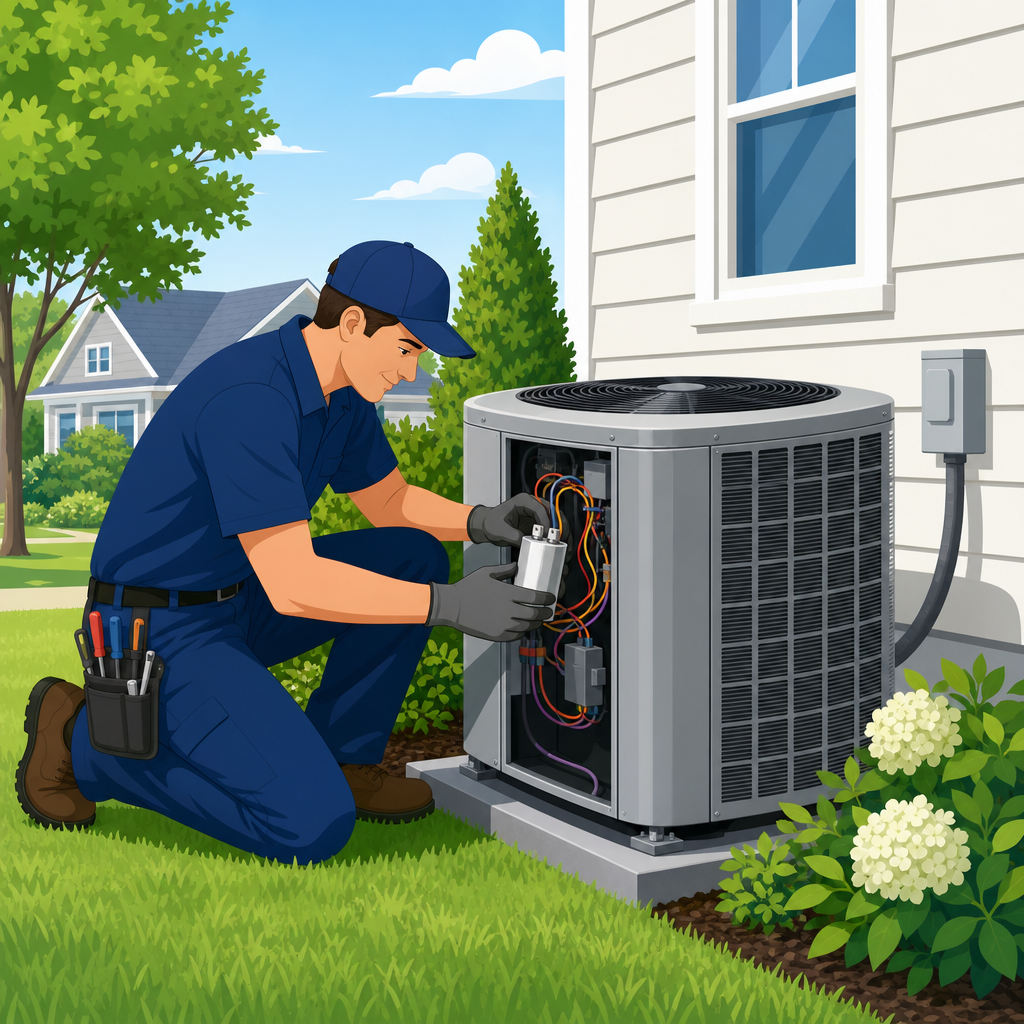
- Clean coil, no leak history, no rust.
- The failure is a single capacitor, contactor, or fan motor (sub-$500 parts).
- System is under 10 years old and on R-410A or newer.
- You've kept up annual maintenance — that history is worth real service life.
- No second failure within 24 months.
The Honest Math on the Comfort Club (Post-Install)
The Comfort Club is really a warranty-preservation tool for whatever system you end up with. Most manufacturer 10-year warranties (including Amana’s qualifying tiers) require annual professional maintenance to stay valid — skip a year and a year-8 compressor claim can become a $1,800–$3,000 out-of-pocket repair.
- Two tune-ups a year (spring AC, fall heating)
- Keeps your manufacturer 10-year warranty valid
- 5-year parts warranty extension
- Emergency rate drops from $189 to $99
- $29.95/month, cancel anytime
When it doesn’t pay off: if you’re paying cash and selling within 18 months, the warranty math is thinner — the next owner inherits the protection, not you. We’ll tell you that on the phone.
Frequently Asked Questions
What's the average lifespan of an AC system in DFW?
National averages (ENERGY STAR/ACCA) put central AC at 15–20 years. In DFW heat-load conditions — 5–6 months of cooling at 8–12 hours daily peak — real-world expectancy is closer to 12–15 years for a well-maintained system, and as short as 8–10 years if it was oversized at install or had skipped maintenance.
How do I find out what refrigerant my system uses?
Check the data plate on the outdoor condenser, usually a sticker near the service valves listing model, serial, and refrigerant type. Pre-2010 systems are almost always R-22; 2010–2024 are typically R-410A; 2025+ are typically R-454B or R-32. If faded, look up the model in the AHRI Directory.
Will a new AC system actually lower my Oncor bill in summer?
Yes, meaningfully — but only when replacing something genuinely old. A 2008 10-SEER → 16 SEER2 swap is ~37% more efficient, about $110/month on a $300 summer bill (~$440/season, ~$2,200 over 5 years before credits). A 14 → 15.2 SEER2 swap is only ~8%, so payback leans more on comfort and warranty. Leaky ducts can waste 20–30% regardless of rating.
What's the difference between a tune-up and a repair?
A tune-up is scheduled preventive maintenance (coil cleaning, refrigerant check, capacitor reading, drain clearing, static pressure, etc.) that catches problems before they fail. A repair is reactive — fixing something that already failed. Comfort Club includes two tune-ups a year; repairs are billed separately.
If I replace, can I keep my existing ductwork?
Usually yes, if the ducts are in good condition and properly sized. We test static pressure during the quote — within spec and no significant leakage means your ducts carry the new equipment. Duct sealing runs $400–$1,200; full replacement $3,000–$6,500.
Are there 2026 federal or state rebates worth knowing?
Use what’s active now: the federal 25C tax credit (up to $2,000 for a qualifying heat pump or up to $600 for qualifying central AC) and the Oncor/Take A Load Off Texas rebate (up to $700 for SEER2 ≥ 16). Stacked, that’s up to $2,700 off a heat pump or $1,300 off central AC. Texas has no separate state HVAC rebate beyond utility programs.
How long does a new AC system last with proper maintenance?
With twice-yearly professional maintenance, a properly sized and installed system in DFW typically lasts 12–15 years, with premium brands reaching 18+ years. Most manufacturer 10-year parts/labor warranties require annual maintenance to remain valid.
What to Do Next
Got a repair quote and trying to decide whether to spend it? Call (972) 673-0408. A real person answers, 7 days a week. Tell us the system age, the refrigerant type, and what the quote is for — nine times out of ten we give a directional read on the phone, at no charge. Need eyes on it? We’ll come out and put a written second-opinion read on paper. Free phone walk-through, zero pressure to sign anything.
No “Act now!” theater. No scare tactics. Just what we’ve done since 2004: tell the truth, fix it right when fixing is right, replace it right when replacing is right.
— Randy & Teresa, and the team at 1st Class Heat & Air, Inc.
Licensed in Texas: TDLR TACLB00018282E. Regulated by The Texas Department of Licensing and Regulation, P.O. Box 12157, Austin, Texas 78711, 1-800-803-9202.