

The 1st Class Guarantee
Trusted Air Conditioning & Heating Services Backed by Industry-Leading Guarantees At 1st Class Heat & Air, your comfort and satisfaction come first. Whether you need fast air conditioning repair, expert AC installation, or reliable heating service, every job is backed by our commitment to quality and peace of mind:

AC installation is far more complex than simply mounting a unit and plugging it in. Professional HVAC installation encompasses a complete system integration that affects your home's comfort, energy efficiency, and long-term operational costs. A proper central air conditioning installation involves precise load calculations, ductwork assessment, refrigerant line installation, electrical connections, thermostat programming, and comprehensive system testing.
The quality of your AC unit installation directly impacts system performance, energy consumption, equipment lifespan, and indoor air quality. This is why choosing experienced HVAC contractors and understanding the installation process is crucial for homeowners.
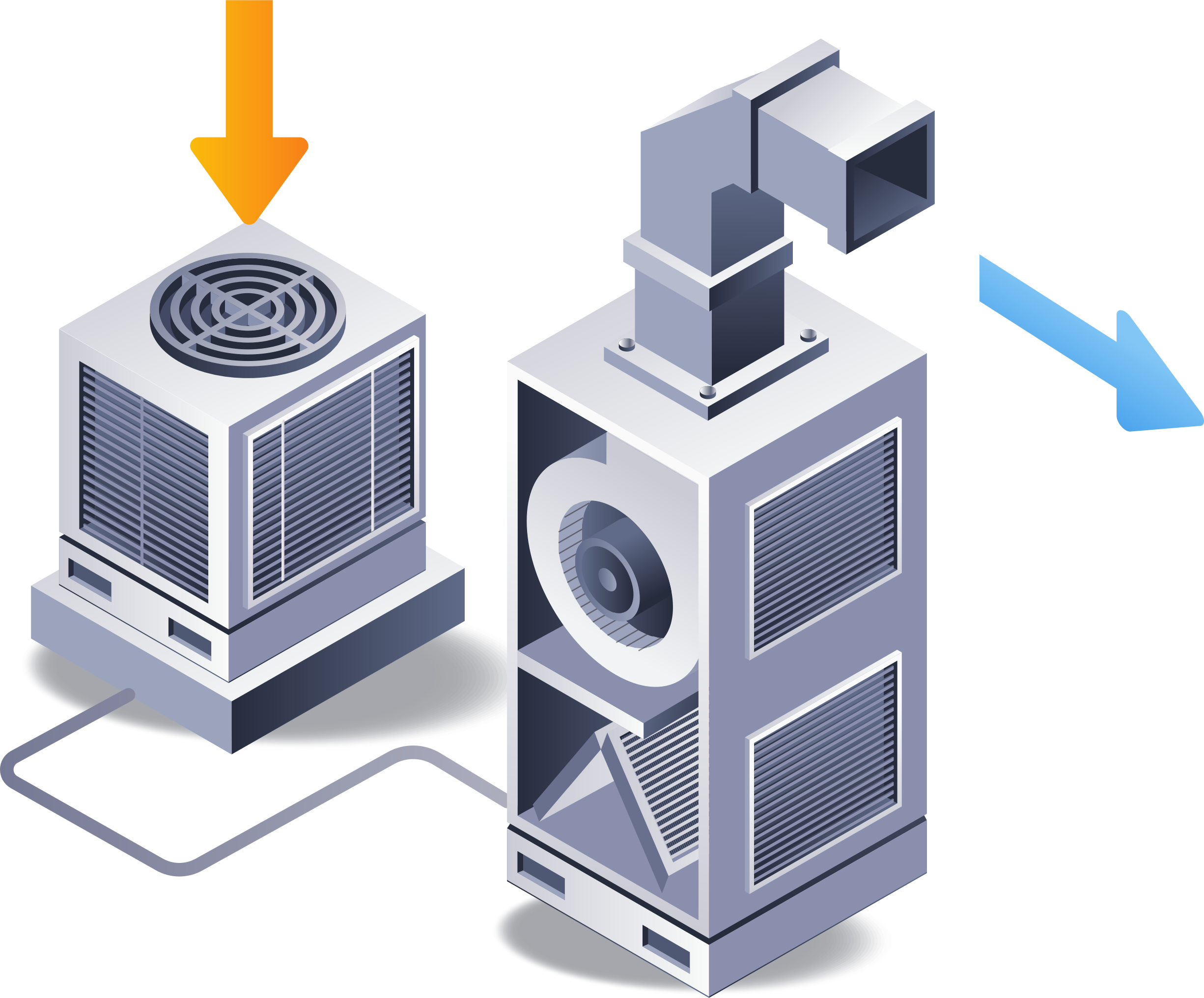
 Same-Day Service Available
Professional AC Installation
in Dallas, TX
Beat the Texas heat with a properly sized, expertly installed air conditioning system. Enjoy better comfort, lower energy bills, and peace of mind backed by manufacturer warranties.
 Warning Signs
When to Consider Replacement vs. Repair
Your air conditioner gives you warning signs before it completely fails. Here’s what to watch for in your Dallas home when deciding between repair and replacement.

Your Home Isn’t Cooling Like It Used To
If your AC is blowing warm air or struggling to maintain your desired temperature during Dallas summers, it may be time for replacement rather than another repair.
- System over 10-12 years old with declining performance
- Frequent refrigerant recharges needed
- Compressor failure (expensive repair on older units)
- Inefficient operation driving up energy costs
- Outdated R-22 refrigerant system

Strange or Loud Noises Coming from the Unit
Unusual sounds from an aging AC system often signal major component failure. When repair costs approach 50% of replacement cost, new installation makes more financial sense.
- Grinding: Failing compressor or motor (costly repair)
- Rattling: Loose or broken internal components
- Squealing: Worn-out belt or failing motor bearings
- Hissing: Refrigerant leak requiring full system evaluation
- Banging: Serious mechanical failure indicating replacement needed

AC Frequently Turns On and Off
Short cycling accelerates wear on your system and wastes energy. On units over 10 years old, this often signals it’s time for a new, properly-sized installation.
- Incorrectly sized unit from original installation
- Aging compressor struggling to maintain cycles
- Multiple electrical component failures
- Low refrigerant from system-wide leaks
- Worn internal components beyond economical repair

Water Leaks or Moisture Around the Unit
Persistent moisture issues on older systems can indicate refrigerant leaks or frozen coils. When combined with the unit’s age, replacement prevents ongoing damage and health risks.
- Cracked or corroded drain pan requiring replacement
- Refrigerant leaks causing frozen coils repeatedly
- Original improper installation causing chronic issues
- Aging system unable to manage Dallas humidity properly
- Multiple leak repairs needed year after year

Weak Airflow from Vents Throughout Your Home
Diminishing airflow in an older AC system often means the blower motor or compressor is failing. New high-efficiency systems provide stronger, more consistent airflow while using less energy.
- Failing blower motor on aging system
- Compressor losing capacity over time
- Ductwork deterioration from original installation
- System undersized for home additions or improvements
- Multiple repairs haven’t resolved the issue

Your Energy Bills Keep Climbing Higher
Rising electricity costs despite normal usage indicate your AC is losing efficiency. A new Energy Star certified system can cut your cooling costs by 20-40% in Dallas’s climate.
- System efficiency below 13 SEER (outdated by today’s standards)
- Aging components requiring more electricity to operate
- Frequent repairs unable to restore efficiency
- New systems offer 16-25 SEER for major savings
- Annual cooling costs exceed new system payment plans
If You Notice Any of These Signs, Don’t Wait
When repair costs approach 50% of replacement cost and your system is over 10 years old, a new AC installation is the smarter investment. Our Dallas HVAC technicians provide expert installation with same-day service available.
Frequently Asked Questions About Our AC Installation Services in Dallas
Get answers to the most common questions Dallas homeowners ask about AC Installation services.

How much does a new AC installation cost in Dallas, TX?
The cost of a new residential AC installation in Dallas typically ranges from $3,500 to $12,000+, depending on several factors:
- System size: Dallas homes need 2-5 ton units depending on square footage (typically 1 ton per 500-600 sq ft)
- SEER rating: Higher efficiency units (16+ SEER) cost more upfront but save money on Texas electricity bills
- System type: Central AC, ductless mini-split, or heat pump systems vary in price
- Home modifications: Ductwork repairs, electrical upgrades, or structural changes add to costs
- Brand and warranty: Premium brands like Carrier, Trane, and Lennox cost more than budget options
Given Dallas’s extreme summer heat (often 100°F+), investing in a reliable, properly-sized system is crucial for your comfort and long-term savings.

How long does AC installation take in a Dallas home?
Most residential AC installations in Dallas are completed in 1-3 days:
- Same-day installation (4-8 hours): Simple system replacement with existing ductwork
- 1-2 days: Standard installation with minor ductwork modifications
- 2-3 days: Complete system replacement requiring new ductwork, electrical work, or structural modifications
- 3+ days: New construction or major home renovations
Dallas’s hot climate means you can’t afford extended downtime. Reputable HVAC contractors will work efficiently to minimize your time without air conditioning, especially during peak summer months.

What size AC unit do I need for my Dallas home?
Proper sizing is critical in Dallas due to extreme heat and humidity. An incorrectly sized unit leads to short cycling, high energy bills, and poor humidity control. Here’s a general guide:
- 1,000-1,500 sq ft: 2-2.5 ton unit
- 1,500-2,000 sq ft: 2.5-3 ton unit
- 2,000-2,500 sq ft: 3-3.5 ton unit
- 2,500-3,000 sq ft: 3.5-4 ton unit
- 3,000+ sq ft: 4-5+ ton unit or zoned system
However, Dallas-specific factors also matter: insulation quality, number of windows, ceiling height, sun exposure, and number of occupants. A professional Manual J load calculation is essential for accurate sizing.
What’s the best SEER rating for a Dallas home?
For Dallas homeowners, we recommend a minimum of 16 SEER, with 18-20+ SEER being ideal for maximum energy savings:
- 14-15 SEER: Federal minimum; acceptable for budget-conscious homeowners but higher operating costs
- 16-17 SEER: Sweet spot for most Dallas homes; balances upfront cost with energy savings
- 18-20 SEER: Excellent efficiency; pays for itself faster in Dallas’s hot climate with 4+ month cooling season
- 20+ SEER: Maximum efficiency; best for large homes or homeowners prioritizing sustainability
With Dallas summers requiring near-constant AC use from May through September, higher SEER ratings can save hundreds of dollars annually on electricity bills.

Do I need permits for AC installation in Dallas, TX?
Yes, AC installation in Dallas requires permits. The City of Dallas and surrounding municipalities require mechanical and electrical permits for HVAC system installation or replacement. Here’s what you need to know:
- Mechanical permit: Required for all AC system installations
- Electrical permit: Needed if electrical work or panel upgrades are involved
- Contractor responsibility: Licensed HVAC contractors typically pull permits on your behalf
- Inspections: City inspectors verify proper installation and code compliance
- Cost: Permit fees typically range from $50-$200
Never hire a contractor who wants to skip permits. Permitted work protects your home value, ensures safety, and maintains insurance coverage.
How do I know when my AC needs to be replaced instead of repaired?
Dallas homeowners should consider AC replacement if you’re experiencing any of these warning signs:
 Poor Cooling Performance
Your home isn’t cooling like it used to, with warm air blowing or inability to maintain desired temperatures. Common causes include low refrigerant, dirty coils, faulty compressor, or thermostat issues.
Strange or Loud Noises
Grinding (worn motor bearings), rattling (loose components), squealing (belt issues), hissing (refrigerant leak), or banging sounds indicate serious mechanical problems.
Frequent On/Off Cycling
Short cycling wastes energy and wears out components faster. Causes include oversized units, dirty filters, frozen coils, low refrigerant, or faulty thermostats.
Water Leaks or Moisture
Puddles around your unit can lead to water damage and mold growth. Usually caused by clogged drains, cracked pans, frozen coils, or improper installation.
Weak Airflow
Poor airflow means your AC works harder, driving up bills and reducing comfort. Causes include clogged filters, blocked vents, failing blower motors, or ductwork leaks.
Rising Energy Bills
Sudden electricity cost spikes indicate inefficient operation. Aging systems, dirty coils, refrigerant leaks, or ductwork leaks are common culprits.

What’s the average lifespan of an AC unit in Dallas, TX?
In Dallas’s extreme climate, residential AC systems typically last 12-15 years, which is shorter than the national average of 15-20 years due to:
- Extended cooling seasons: Dallas ACs run 6-7 months yearly vs. 3-4 months in moderate climates
- Extreme temperatures: Regular 100°F+ days stress compressors and components
- High humidity: Increases wear on condensers and evaporator coils
- Maintenance habits: Neglected systems fail earlier; well-maintained units can reach 18+ years
If your AC is over 10 years old and requiring frequent repairs, start budgeting for replacement rather than investing in expensive repairs.

Can I replace just the outdoor unit or do I need to replace the entire system?
While it’s technically possible to replace just the outdoor condenser unit, we recommend replacing both indoor and outdoor units together for Dallas homes. Here’s why:
- Efficiency mismatch: New outdoor units paired with old indoor coils lose 20-30% efficiency
- Warranty concerns: Most manufacturers void warranties on mismatched systems
- Refrigerant compatibility: Newer R-410A systems don’t work with older R-22 indoor units
- Age consideration: If the outdoor unit failed, the indoor unit is likely near failure too
- Cost-effectiveness: Installing both at once saves on labor costs vs. two separate installations
Exception: If your indoor unit is less than 5 years old and the outdoor unit failed due to accident or defect, partial replacement may make sense.

What does the AC installation process involve?
Professional AC installation in Dallas follows a comprehensive process to ensure optimal performance and longevity:
- Step 1 – In-Home Assessment: Load calculation (Manual J), ductwork inspection, electrical evaluation, and discussion of your cooling needs
- Step 2 – System Recommendation: Proper sizing, SEER rating options, brand recommendations, and detailed quote
- Step 3 – Permits: Contractor pulls necessary mechanical and electrical permits from the city
- Step 4 – Old System Removal: Safe refrigerant recovery, disconnection, and disposal of old equipment
- Step 5 – Ductwork Preparation: Sealing leaks, adding insulation, or installing new ducts if needed
- Step 6 – Indoor Unit Installation: Mounting air handler or furnace, connecting to ductwork and drainage
- Step 7 – Outdoor Unit Installation: Level concrete pad installation, proper clearances, and secure mounting
- Step 8 – Refrigerant Lines: Installing or replacing copper linesets, vacuum testing, and refrigerant charging
- Step 9 – Electrical Connections: Wiring, disconnect boxes, and thermostat installation
- Step 10 – Testing & Inspection: System startup, performance verification, city inspection, and homeowner walkthrough

What should I look for when hiring an AC installer in Dallas?
Choosing the right HVAC contractor is crucial for Dallas homeowners. Look for these qualifications:
- Valid Texas HVAC license: TACL (Texas Air Conditioning Contractors License) is required by law
- Insurance coverage: General liability and workers’ compensation to protect your property
- Local experience: Familiarity with Dallas building codes, climate challenges, and permit requirements
- Manufacturer certifications: Factory-trained technicians ensure proper installation and warranty validity
- Written estimates: Detailed quotes including equipment specs, labor, materials, and warranty information
- Load calculations: Contractors who perform Manual J calculations rather than guessing sizes
- Customer reviews: Strong reputation on Google, BBB, and local review platforms
- Warranty offerings: Both manufacturer equipment warranties and contractor labor warranties
Red flags: Cash-only payments, no written estimates, pressure tactics, or unwillingness to pull permits.

Do I need to do anything to prepare for AC installation day?
Yes! Help your Dallas HVAC installation go smoothly with these preparations:
- Clear pathways: Remove obstacles between doors and the indoor/outdoor unit locations
- Protect valuables: Move fragile items, artwork, and furniture away from work areas
- Secure pets: Keep dogs and cats in a separate room or off-site during installation
- Outdoor access: Ensure gates are unlocked and outdoor unit area is accessible
- Attic access: Clear space under attic access point if indoor unit is attic-mounted
- Electrical panel: Ensure easy access to your home’s electrical breaker box
- Parking: Provide space for contractor trucks near your home
- Communication: Designate someone to be home to answer questions

What’s the best time of year to install a new AC in Dallas?
The best time for AC installation in Dallas is spring (March-May) or fall (October-November):
- Spring (March-May): Ideal timing before summer heat arrives; contractors are less busy, potentially lower prices, comfortable installation conditions
- Fall (October-November): After cooling season ends; off-season discounts common, less urgency allows better planning
- Avoid summer (June-September): Peak season means higher prices, longer wait times, extreme discomfort if current AC fails
- Winter (December-February): Lowest demand and best deals, but uncomfortable if installation takes multiple days
Emergency replacements: If your AC fails during Dallas summer, don’t delay. Reputable contractors offer same-day or next-day emergency installations to keep your family safe during extreme heat.

What type of AC system is best for Dallas homes?
Dallas homeowners have several AC system options, each with unique benefits:
- Central Air Conditioning (Most Common): Whole-home cooling through ductwork; best for existing homes with ducts; 14-25 SEER efficiency; $3,500-$8,000 installed
- Heat Pump Systems: Cooling AND heating in one unit; ideal for Dallas’s mild winters; 15-20+ SEER; $4,000-$10,000; most energy-efficient option
- Ductless Mini-Split Systems: No ductwork required; perfect for room additions, garages, or homes without ducts; 18-30 SEER; $3,000-$7,000 per zone; individual zone control
- Packaged Units: All components in one outdoor cabinet; common in smaller Dallas homes with limited indoor space; 14-17 SEER; $4,000-$8,000
- Geothermal Heat Pumps: Uses ground temperature for extreme efficiency; 30+ SEER equivalent; $15,000-$25,000; lowest operating costs but high upfront investment
For most Dallas residential homes, a high-efficiency central AC system (16-18 SEER) or heat pump provides the best balance of performance, cost, and comfort.

Should I get a single-stage, two-stage, or variable-speed AC for my Dallas home?
The compressor type significantly impacts comfort and efficiency in Dallas’s climate:
- Single-Stage (Basic): On/off operation only; lowest upfront cost ($3,500-$5,000); less efficient; temperature fluctuations; noisier operation; adequate for budget-conscious homeowners
- Two-Stage (Better): Low and high-speed operation; moderate cost ($5,000-$7,500); 20-30% more efficient than single-stage; better humidity control; more consistent temperatures; recommended for most Dallas homes
- Variable-Speed/Inverter (Best): Continuously adjusts capacity 40-100%; highest upfront cost ($7,000-$12,000); up to 50% more efficient; superior humidity removal crucial for Dallas summers; near-silent operation; most consistent comfort; best for large homes or those prioritizing comfort
Given Dallas’s 6+ month cooling season and high humidity, two-stage or variable-speed systems pay for themselves through energy savings and superior comfort.

Do I need a zoned HVAC system for my Dallas home?
Zoned HVAC systems make sense for many Dallas homes, especially if you experience:
- Multi-story homes: Upper floors significantly hotter than lower levels (common in Dallas due to attic heat)
- Large square footage: Homes over 3,000 sq ft benefit from independent zone control
- Varied occupancy: Guest rooms or home offices used sporadically
- Temperature disputes: Family members prefer different temperatures
- Sun exposure differences: West-facing rooms get afternoon sun requiring more cooling
Cost: Zoning systems add $2,000-$5,000 to installation but can save 30%+ on energy bills. Benefits include customized comfort, reduced equipment wear, and energy savings by not cooling unused areas.

How much will my energy bills increase with a new AC in Dallas?
A properly sized, high-efficiency AC system should actually decrease your energy bills in Dallas compared to an old, inefficient unit:
- Older systems (10+ years, 10-13 SEER): $200-$400+ monthly summer cooling costs for average 2,000 sq ft home
- New standard efficiency (14-15 SEER): $150-$250 monthly (25% savings)
- New high-efficiency (16-18 SEER): $120-$200 monthly (40% savings)
- Premium efficiency (20+ SEER): $100-$160 monthly (50%+ savings)
Additional factors affecting Dallas cooling costs: home insulation, thermostat settings (recommended 76-78°F), air sealing, window quality, and maintenance. With average Dallas electricity rates around $0.12-$0.14/kWh, upgrading from a 12 SEER to 18 SEER system can save $600-$1,200 annually.

Are there rebates or tax credits for new AC installation in Dallas?
Yes! Dallas homeowners can take advantage of several incentives for energy-efficient AC installations:
- Federal Tax Credit (2024-2032): Up to $2,000 for heat pumps or high-efficiency central AC (must meet ENERGY STAR requirements)
- Oncor Rebates: Dallas-area electric provider offers rebates for ENERGY STAR certified systems; typically $200-$500 depending on efficiency
- Manufacturer Rebates: Seasonal promotions from Carrier, Trane, Lennox, etc.; $200-$1,000 rebates common
- Financing Programs: Many Dallas HVAC companies offer 0% financing for 12-60 months on new installations
- ENERGY STAR Requirements: Must meet minimum SEER ratings (typically 15-16+) to qualify
Your HVAC contractor can help identify all available rebates and handle paperwork. Combined incentives can reduce your out-of-pocket costs by $1,000-$3,000+.

What’s the payback period for a high-efficiency AC system in Dallas?
In Dallas’s extreme climate, high-efficiency AC systems pay for themselves faster than in moderate climates:
- 16 SEER vs. 14 SEER: Additional $500-$800 cost; 3-5 year payback through energy savings
- 18 SEER vs. 14 SEER: Additional $1,200-$2,000 cost; 5-7 year payback
- 20+ SEER vs. 14 SEER: Additional $2,500-$4,000 cost; 8-12 year payback
Factors accelerating payback in Dallas: 6+ month cooling seasons, frequent 100°F+ days, rising electricity rates, available rebates/tax credits, and increased home value. Consider that the average AC lifespan is 12-15 years, so a 7-year payback still provides 5-8 years of pure savings.

Do I need new ductwork when installing a new AC in Dallas?
Not always, but ductwork evaluation is essential during AC replacement. You likely need ductwork repairs or replacement if:
- Age: Ductwork over 15-20 years old often has deteriorated insulation and air leaks
- Visible damage: Crushed ducts, disconnected sections, or pest damage
- Poor insulation: Especially in Dallas attics where temperatures reach 140°F+
- Undersized ducts: If upgrading to a larger capacity system
- Mold or contamination: Health hazard requiring replacement
- Unbalanced airflow: Some rooms too hot/cold indicating ductwork design issues
- High energy bills: Duct leakage wastes 20-30% of cooled air in typical homes
Cost considerations: Duct sealing: $500-$1,500; Partial duct replacement: $1,500-$3,500; Complete duct replacement: $3,000-$8,000. While expensive, new ductwork can improve efficiency by 30-40% and is often necessary for warranty validity on new equipment.

Will I need electrical upgrades for a new AC installation?
Many Dallas homes, especially older ones, require electrical upgrades during AC installation:
- Older homes (pre-1980s): Often have 100-150 amp panels insufficient for modern high-efficiency AC systems
- Panel upgrades: New AC may require 200-amp service; $1,500-$3,000 typically
- Dedicated circuit: AC systems need dedicated 240V circuits; $300-$800 if not existing
- Disconnect box: Required by code within sight of outdoor unit; $150-$400
- GFCI protection: New code requirements in some areas; $200-$500
Your HVAC contractor will assess electrical capacity during the estimate. Electrical work must be performed by licensed electricians and requires separate permits in Dallas.

Where should the outdoor AC unit be located on my Dallas property?
Proper outdoor unit placement is crucial for efficiency and longevity in Dallas’s climate:
- Shaded location: North or east side of home preferred; avoid afternoon western sun which reduces efficiency up to 10%
- Level ground: Concrete pad prevents settling and vibration
- Clearances: 2-3 feet on sides, 5+ feet above unit for airflow and service access
- Vegetation: Keep shrubs/plants 2+ feet away; never enclose unit in lattice or fencing
- Distance from windows: Minimize noise disruption to bedrooms
- Drainage: Avoid low spots where water accumulates
- HOA considerations: Some Dallas HOAs restrict placement or require screening
- Refrigerant lines: Minimize distance to indoor unit (typically 15-50 feet maximum)
Pro tip: Plant shade trees on the west side of your property to reduce afternoon heat on your home and outdoor unit, but keep them at least 5 feet from the unit itself.

What maintenance does my new AC require in Dallas?
Regular maintenance is critical in Dallas’s harsh climate to maximize lifespan and efficiency:
- Monthly (DIY): Change/clean air filters (every 30-60 days during cooling season)
- Quarterly (DIY): Clear debris from outdoor unit, check for visible damage, ensure vents are unblocked
- Twice Yearly (Professional): Spring and fall tune-ups including refrigerant check, coil cleaning, electrical connections, condensate drain clearing, blower motor lubrication, thermostat calibration
- As Needed: Clean outdoor coils (quarterly in dusty Dallas areas), trim vegetation around unit
Cost: Professional maintenance visits: $100-$200 per visit; Maintenance plans: $200-$400 annually for 2 visits. Benefits: 15-20% lower energy bills, fewer breakdowns, extended equipment life, maintained warranty validity, priority service.

What warranties come with a new AC installation?
New AC systems in Dallas typically include multiple warranty coverages:
- Manufacturer Parts Warranty: 5-10 years on parts (compressor often 10 years); requires registration within 60-90 days; may require proof of annual professional maintenance
- Extended Parts Warranty: Some manufacturers offer 10-12+ year coverage for premium models
- Contractor Labor Warranty: 1-2 years typical; covers installation defects and workmanship; quality contractors offer 5-10 year labor warranties
- Compressor Warranty: Often separate 10-year coverage on this critical component
- Optional Extended Warranties: Available for purchase; $300-$1,000 for 5-10 additional years
Important: Warranties typically require professional installation by licensed contractors, proper system sizing, annual professional maintenance, and timely registration. Always get warranty details in writing before installation.

How often should I schedule professional AC maintenance in Dallas?
Dallas homeowners should schedule professional AC maintenance twice per year minimum:
- Spring tune-up (March-April): Before cooling season; prepare system for summer heat; identify potential problems early
- Fall tune-up (October-November): After cooling season; clean and inspect after heavy use; prepare for winter (if heat pump)
Additional maintenance may be needed if you have: pets (more frequent filter changes), older systems (8+ years), dusty environment, or heavy usage. Benefits of biannual maintenance: 95% reduction in unexpected breakdowns, 15-20% energy savings, manufacturer warranty compliance, and priority emergency service.

What financing options are available for AC installation in Dallas?
Most Dallas HVAC companies offer multiple financing options to make AC installation affordable:
- 0% Financing: 12-48 month promotional periods; no interest if paid in full within promotional period; requires good credit (typically 680+ score)
- Traditional Financing: 5-15 year terms; 5-15% APR depending on credit; lower monthly payments but more interest
- HVAC-Specific Loans: Through companies like GreenSky or Service Finance; competitive rates; quick approval
- Home Equity Loans/HELOC: Lower interest rates; tax-deductible interest; uses home as collateral
- Personal Loans: Through banks/credit unions; no home equity required; typically higher interest
- Credit Cards: Last resort due to high interest; consider 0% intro APR cards if paying off quickly
Example: $7,000 AC system at 0% for 48 months = $146/month with no interest vs. paying full price upfront, making high-efficiency systems accessible to more Dallas homeowners.

Does a new AC system increase my Dallas home’s value?
Yes! A new, high-efficiency AC system is a valuable home improvement in Dallas’s climate:
- ROI: Typically recover 50-70% of installation cost in home value increase
- Selling advantage: Major selling point in Texas market where AC is essential
- Buyer confidence: New system means no immediate replacement concerns for buyers
- Energy efficiency appeal: High SEER ratings attract environmentally-conscious buyers
- Home inspection: New AC passes inspection cleanly, avoiding negotiation obstacles
- Faster sales: Homes with new HVAC systems sell faster in Dallas market
Example: $8,000 AC installation may add $4,000-$5,600 to home value immediately, with full value recovery through faster sales and fewer buyer objections. Plus, you enjoy reduced energy bills and improved comfort until you sell.
Ready to Install Your New AC System?
Don’t let Dallas heat compromise your family’s comfort. Our licensed HVAC technicians provide professional AC installation with same-day service available.
Free In-Home Estimates • Licensed & Insured • 10-Year Warranty
 Call (972) 673-0408 for Your Free Estimate
Serving Dallas, Plano, Frisco, McKinney, Allen, Richardson & All DFW Areas